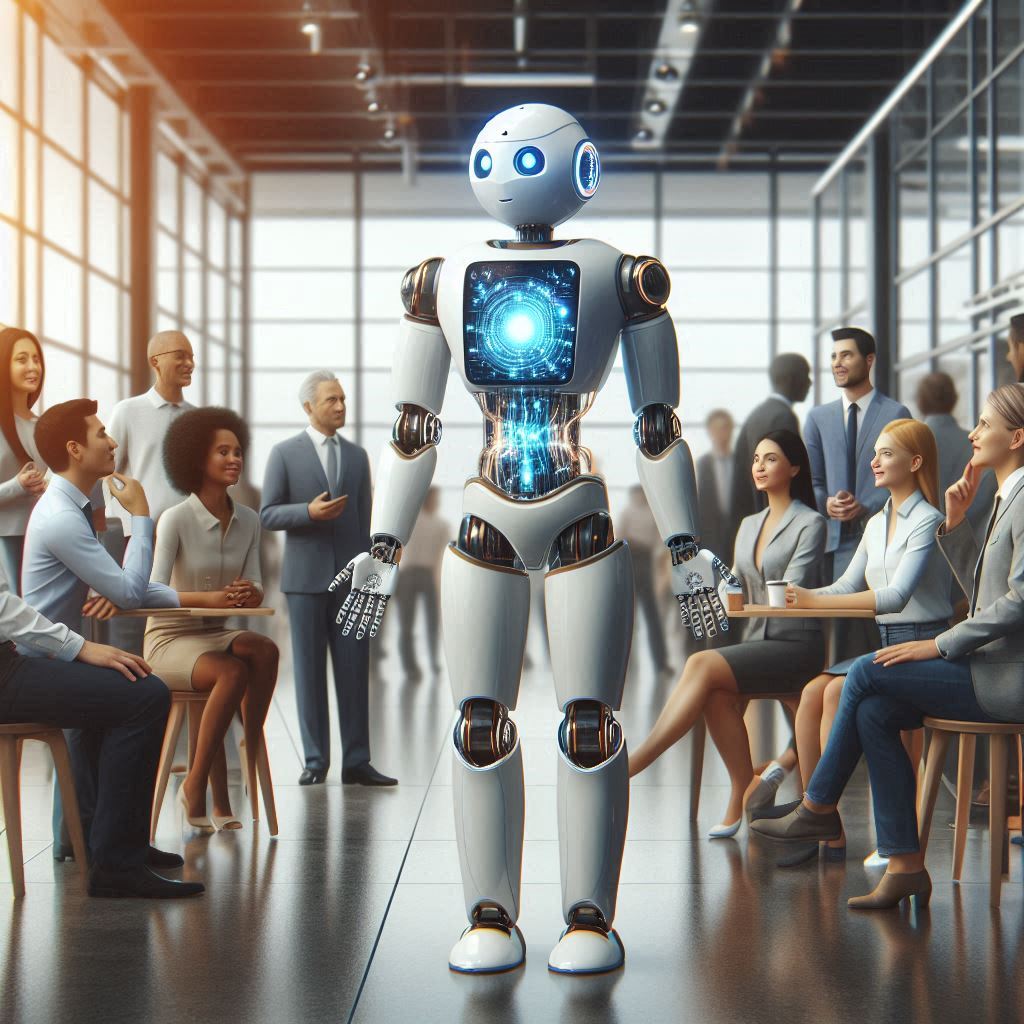
Artificial Intelligence (AI) is no longer a futuristic idea – it’s a present reality that is reshaping industries, society, and the way we live our daily lives. From virtual assistants in our smartphones to advanced machine learning models driving billion-dollar decisions, AI has come a long way. But where is it headed next?
Current Evolution of AI (As of 2025)
1. Generative AI at the Forefront
2023-2025 has seen explosive growth in generative AI. Models like ChatGPT, MidJourney, and Google Gemini have transformed content creation, coding, design, and even music composition. These tools are no longer just novelties—they’re being integrated into professional workflows across the globe.
2. Specialized AI Models
Rather than using one-size-fits-all solutions, companies are now developing specialized AI models tailored for medicine, law, finance, customer support, and more. These domain-specific models offer better accuracy and contextual understanding.
3. AI Regulation and Ethics
Governments and institutions are beginning to introduce regulations to govern how AI can be used—especially in areas like healthcare, education, and mental health. Recent laws, such as Illinois banning unsupervised AI therapy, show that ethical concerns are being taken seriously.
4. AI in Daily Life
From smart home assistants and AI-powered cameras to automated customer service and predictive shopping, AI is deeply embedded in consumer experiences.
Future Evolution of AI: What Lies Ahead?
1. Reasoning and Common Sense AI
Companies like xAI, Google, Baidu and OpenAI are now working on models that go beyond pattern recognition to reasoning—making decisions more like humans. This is a huge leap forward and could lead to more reliable AI in critical systems like legal advice or medical diagnostics.
2. Energy Efficiency and Hardware Innovation
Training large AI models consumes a massive amount of power. The next big innovation will come from building energy-efficient chips and algorithms. Expect companies like NVIDIA, AMD, and startups to drive a new wave of green AI technology.
3. Human-AI Collaboration
The future isn’t about AI replacing humans—it’s about collaboration. In workplaces, AI will handle repetitive tasks, while humans will focus on creativity, decision-making, and emotional intelligence.
4. AI Legislation and Digital Rights
As AI systems become more powerful, digital rights, data ownership, and transparency will become hot topics. Countries will need strong AI governance to ensure fair and safe use.
5. Artificial General Intelligence (AGI)
The holy grail of AI is AGI—systems that can understand, learn, and apply knowledge across a wide range of tasks just like a human. While we’re not there yet, some experts believe we could see early forms of AGI within the next 10–15 years.
Conclusion
AI has already begun transforming our world, but we’re only scratching the surface. The current phase is about scaling, optimizing, and responsibly deploying these tools. The future lies in collaboration, ethical development, and pushing boundaries—with care.
As a society, we must ask not just what AI can do, but what it should do. With smart regulation, inclusive innovation, and human-centric design, AI’s future can be one of empowerment rather than replacement.